
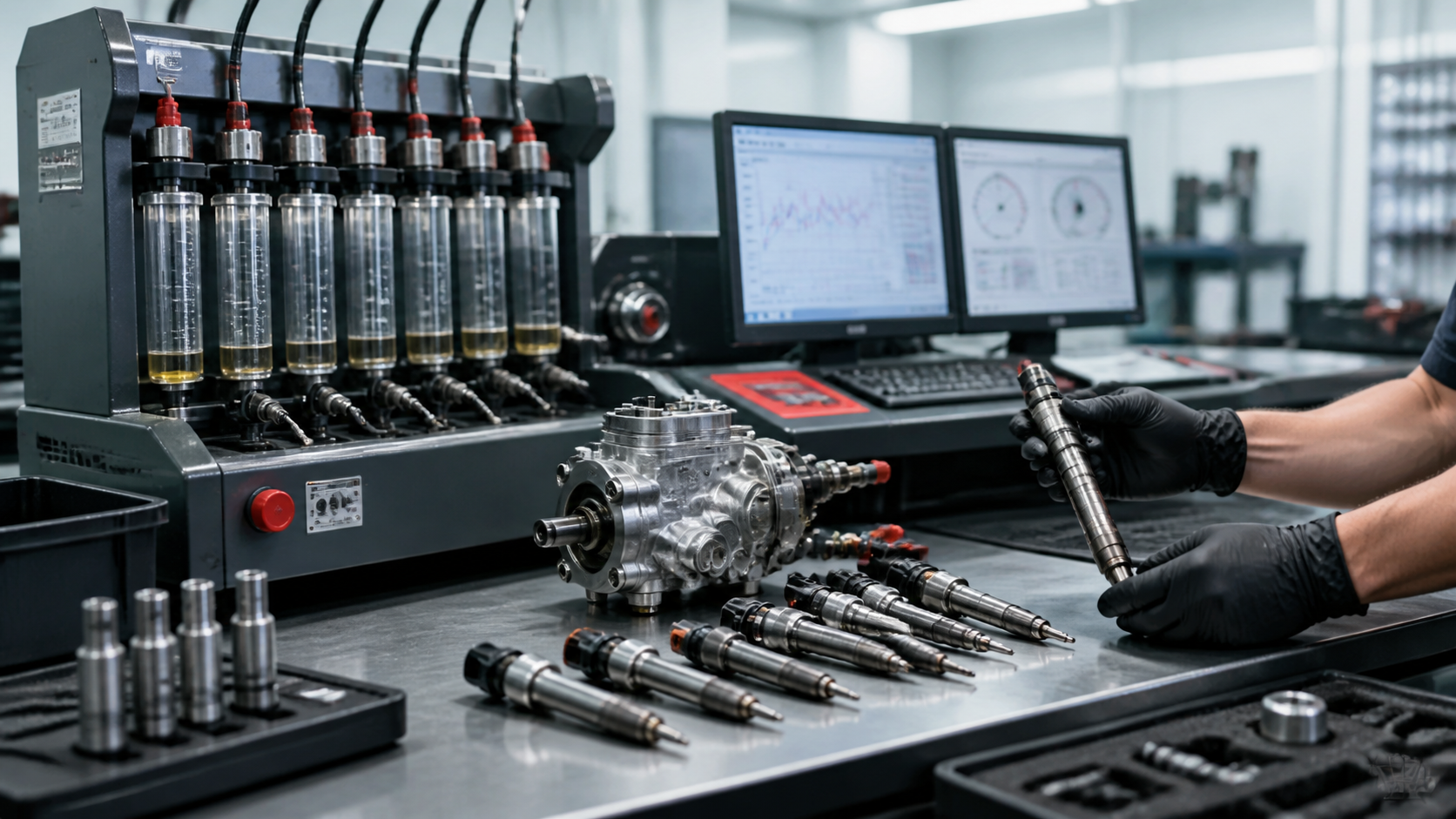
As fuel systems become more precise, test benches and end-of-line inspection are becoming essential to diesel aftermarket confidence.
The diesel aftermarket is becoming more technical. In the past, many replacement parts were selected mainly by appearance, price, or basic model number. Today, fuel injection systems demand much higher precision. Common rail injectors, high-pressure pumps, sensors, filters, and electronic control elements must work together under demanding pressure and timing conditions. This means quality control is no longer a background process. It is now a central selling point for serious diesel parts suppliers and distributors.
Common rail systems are designed to deliver fuel at high pressure with accurate timing and fine atomization. Small deviations can affect engine performance immediately. A weak injector may cause hard starting, rough idle, smoke, knocking, power loss, or abnormal fuel consumption. A pump with unstable pressure output can create broader fuel system problems. For workshops and fleet operators, these issues translate into repeated repair visits, vehicle downtime, and loss of trust. That is why tested components have a real commercial advantage over parts sold only by appearance.
End-of-line testing helps reduce these risks before products reach the customer. For injectors and pump assemblies, hydraulic testing can verify flow, pressure behavior, leakage, response consistency, and operating stability. While different product categories require different test procedures, the principle is the same: the supplier should confirm performance before shipment rather than leaving the workshop to discover the problem later. This approach protects the distributor’s reputation and improves repeat order confidence.
Test benches are also becoming more important in repair workshops. A modern common rail test bench allows technicians to evaluate injectors and pumps under controlled conditions. Instead of guessing whether a component is faulty, the workshop can compare results against known performance ranges. This supports better diagnosis, more accurate repair decisions, and a more professional customer experience. In regions where diesel fleets are growing quickly, workshops with diagnostic equipment can differentiate themselves from competitors who rely only on manual inspection.
For distributors, test bench knowledge helps with product sales as well. When a customer asks why one injector costs more than another, the answer should not be vague. A distributor can explain the importance of tested performance, stable pressure control, proper calibration, and correct part-number matching. Technical credibility makes it easier to sell quality-focused parts in markets where buyers may otherwise compare only the lowest price.
Jinan Parkway Auto Parts Co., Ltd. supplies diesel fuel injection products, injectors, pumps, filters, engine components, and common rail testing equipment for global aftermarket buyers. The company’s product direction recognizes that parts and service capability are connected. A distributor selling injectors can also benefit from technical catalogs, matching support, installation guidance, and diagnostic training. A workshop using a test bench can create stronger demand for qualified replacement parts. Together, these elements form a more complete aftermarket service chain.
Quality control also supports OEM and private-label cooperation. Buyers who place their local brand on packaging need confidence that the product inside will perform reliably. Neutral packaging and private-label programs can create strong market positioning, but only when product consistency is maintained. Testing, outgoing inspection, packaging management, and shipment control all contribute to the final customer experience. In this sense, quality control is not only an engineering function. It is a brand-protection strategy.
Global supply adds another layer of responsibility. Parts shipped to the Middle East, South America, Africa, Southeast Asia, Central Asia, Eastern Europe, Oceania, and other regions may pass through long logistics routes before reaching the final workshop. If a product arrives with quality problems, replacement is expensive and slow. This makes pre-shipment confirmation especially important for export business. The more distant the market, the more valuable reliable testing becomes.
The future of diesel aftermarket competition will favor suppliers and distributors who combine product range with technical discipline. Price will always matter, but it will not be enough on its own. Buyers need the right part, verified performance, practical support, and stable delivery. Common rail testing and quality control help turn diesel parts supply from a simple transaction into a long-term business relationship. For global buyers looking to build repeat demand, tested products and technical service are becoming essential parts of the value proposition.


