
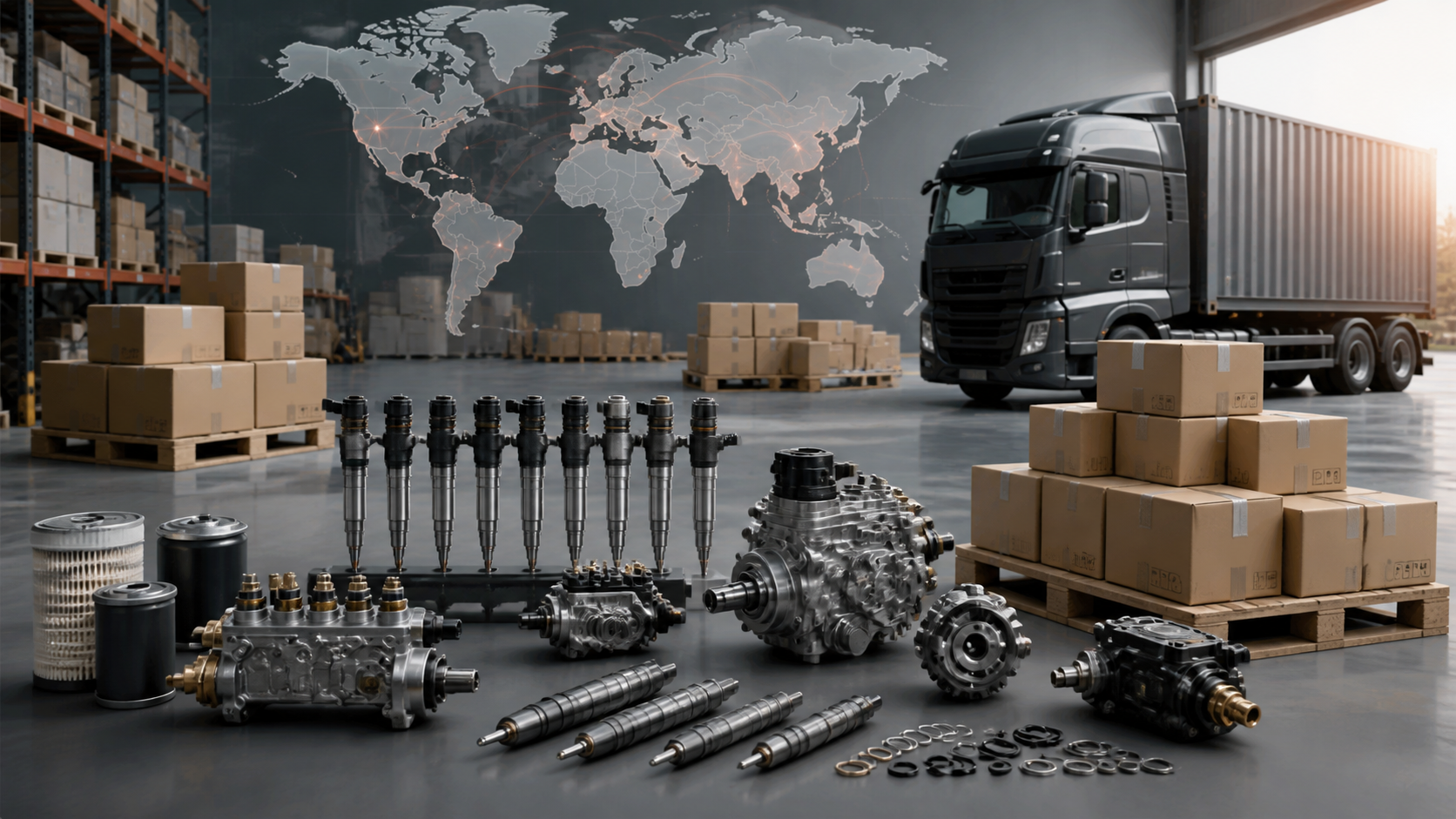
How distributors can prepare for stronger demand in heavy-duty diesel fuel system parts across emerging and mature export markets.
The global aftermarket for diesel fuel injection parts is entering a more disciplined stage of growth. Demand is no longer driven only by emergency repair orders. It is increasingly shaped by planned fleet maintenance, distributor stocking strategies, and the need for dependable replacement parts that can keep commercial vehicles, construction machinery, and industrial diesel engines operating with less downtime. For suppliers such as Jinan Parkway Auto Parts Co., Ltd., this shift creates a clear opportunity to support buyers with both genuine OEM options and high-value aftermarket alternatives.
Across the Middle East, South America, Africa, Southeast Asia, Central Asia, Eastern Europe, and Oceania, diesel-powered vehicles remain the practical backbone of logistics, mining, infrastructure construction, agriculture, and long-distance transportation. While alternative powertrains continue to develop, many regional markets still depend on diesel because it offers high torque, long operating range, established repair knowledge, and an installed vehicle base that will require service for many years. As a result, fuel injectors, fuel pumps, filters, and related engine components continue to be repeat-purchase products rather than occasional accessories.
One of the strongest drivers is the age and size of the active vehicle fleet. Heavy-duty trucks and machines usually work under demanding conditions, often with long daily operating hours, variable fuel quality, high dust levels, and uneven maintenance routines. These conditions place direct stress on common rail injectors, high-pressure pumps, filtration systems, and fuel delivery components. When these parts fail, a vehicle can be removed from service immediately, causing lost transport revenue, delayed construction schedules, or workshop backlogs. Buyers therefore pay close attention not only to price, but also to availability, fitment accuracy, and supplier response speed.
For regional distributors, this creates a business model built around predictable repeat demand. A distributor that can keep fast-moving injector models, fuel pump assemblies, filter elements, and repair kits in stock becomes more valuable to workshops and fleet operators. The most successful buyers usually combine a core inventory of high-demand parts with a reliable sourcing channel for less common model numbers. Part-number matching support is especially important because many diesel platforms have similar-looking components with different calibrations, pressures, or installation requirements.
Parkway’s role in this environment is to provide a broader procurement path under one roof. The company supports buyers with diesel fuel injection products, engine parts, filters, common rail test benches, genuine OEM options, and cost-effective aftermarket replacements. This combination allows customers to choose the right balance between budget, quality level, and market positioning. For some customers, genuine OEM supply builds confidence with premium end users. For others, tested aftermarket alternatives create stronger margin and faster movement in price-sensitive markets.
Quality control is another decisive factor. Diesel fuel injection components operate under high pressure and tight tolerances. Poor-quality parts can cause hard starting, unstable idle, excess smoke, power loss, abnormal fuel consumption, or secondary engine damage. This is why buyers increasingly ask for testing, packaging control, and technical confirmation before shipment. End-of-line inspection and hydraulic testing give distributors confidence that the parts they receive can support repeat business rather than one-time sales followed by complaints.
Global logistics support also matters. Buyers in distant markets need flexible shipping arrangements, including air freight for urgent workshop demand, sea freight for regular stocking programs, and rail or consolidated shipment options where available. A supplier that understands both product matching and shipping planning can help customers reduce inventory pressure while still responding quickly to local market needs.
Looking ahead, diesel fuel injection aftermarket demand is expected to remain resilient because it is tied to real working equipment. Trucks, construction machines, and industrial engines cannot wait for ideal supply chains. They need available parts, reliable testing, and practical technical support. For distributors and service networks, the opportunity lies in choosing suppliers that can provide stable product selection, quality control, and export-market experience. Parkway is positioned to serve this need across major diesel aftermarket regions with repeatable supply and long-term cooperation programs.


